
"I have a deep interest in seeing the town successfully navigate its challenges, and I think of myself as someone who's very collaborative and team minded. It’s not about me doing everything and making all the decisions. It’s about my making sure that the voices of the community and of the staff are heard and making fiscally responsible decisions and seeing that all of those things are balanced."
—Erin Enouen, running for re-election to Town of Rochester Town Supervisor
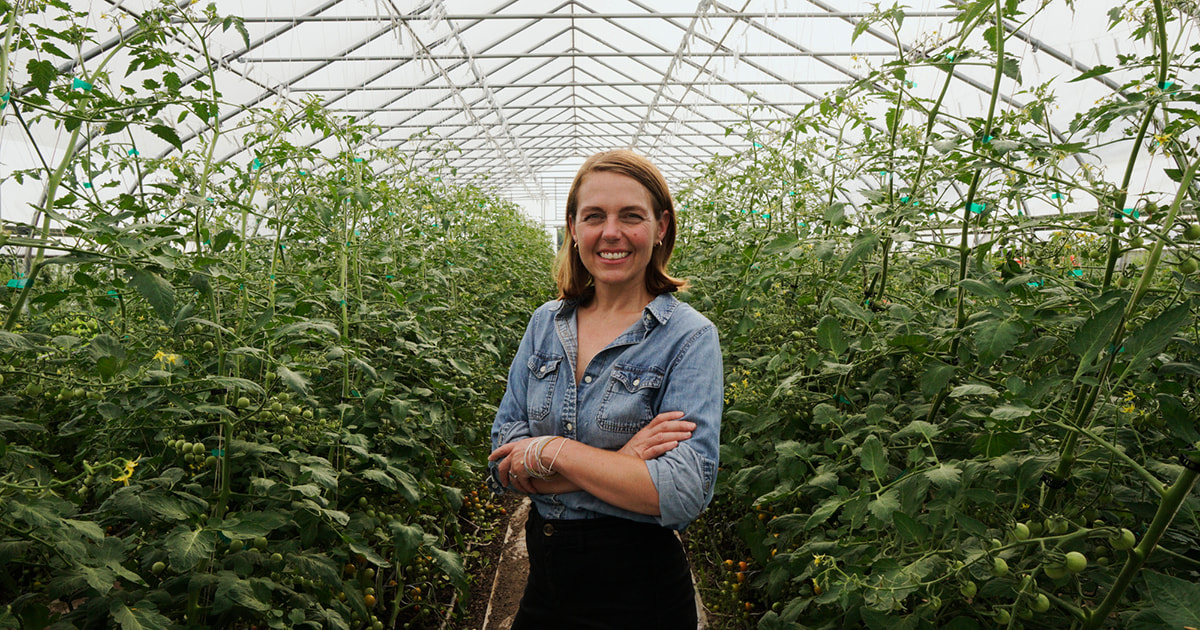
Erin is dedicated to:
Supporting the people who keep our town running with fair staff pay, updated tools, and consistent leadership. Investing in the team means better services for everyone.
Thoughtful development through land-use policies that encourage what we want to see, including improving housing, preserving agriculture, and protecting our resources.
Improving & maintaining infrastructure with three bridge projects, updating park facilities, and all town facilities for the next decade.
Increasing access and transparency by moving records online, encouraging public engagement, and making decisions in the open and with clarity.
Responsible fiscal management achieved through capital improvement planning, long term financial planning, forward-thinking revenue projection and grant utilization.
Interview with Erin Enouen by Mara Kearney
How long have you lived in the Town of Rochester, and what brought you here?
I moved here in 2013. I had been working here since 2010. I moved to Ulster County in 2008 to farm, and my winter jobs were at a business that's located in our town. I got to know the area and had a community here and really loved it. I would ride my bike after work, just because I really enjoyed it here. I started working full time in our town in 2011. And that was when my husband and I started looking for a place of our own to continue farming., We found a spot here that we could afford with land, and my job and community of colleagues were here. So it just felt like the right place to be.
Tell us about your history serving on the Town Board, prior to becoming Town Supervisor.
I got elected to the Town Board for a term starting in 2020. I had only been an elected official for three months when COVID happened. Before that, I was on the Zoning Board of Appeals, starting around 2016, 2017. I got my feet wet there and really enjoyed the community And I liked learning about local government. That's really what inspired me to run for the Town Board. I was interacting with the zoning code a lot and was really interested in the process of being a legislator, meaning drafting legislation, passing legislation, which is one of the big roles of the Town Board.
Then you became the town supervisor.
Yeah, that was not planned. There was a resignation, and that was May 3rd of 2024.
Prior to this work in town government what was your work experience? You and your husband are farmers?
Yes, and legislative aspects of farming and related business are really what got me interested in local governance. The preservation of agriculture in our community is also very important to me, and also what made me really want to jump in. I wanted to make sure that that farming heritage could continue to be supported in the town.
But in terms of being the town supervisor, the job is twofold. I'm both doing day-to-day management of government operations and chairing the board. So what I've learned from managing my farm business is that it is very dependent on how each season is very different. There's a lot that's outside of your control. You learn what's in your control, and to put everything that you can into that and into developing a team that can thrive in that environment. Also the type of communication that it takes to work on a team like that. I was managing staff, managing the business, marketing, and analyzing sales data. I am definitely a very data-driven person, so I was working on spreadsheets a lot. Alongside running our farm, I had held a job as a sales and marketing manager.
One thing I don't talk about a lot which really prepared me for this position and is something I still rely on is that I have a liberal arts degree from a small, private college, which basically was a mathematics and philosophy degree. I really loved that environment. I studied Plato and Aristotle and everything that the founding fathers wrote leading up to the formation of the United States. I really got to delve into the thinking behind lowercase D democracy, the history, everything that built it up. So I have this foundation. It doesn’t mean that I have all the answers, but I've learned how to think about things, analyze, really know what I know and what I don't know. And that has really helped me a lot as town supervisor.
I have noticed big improvements at the transfer station. It's really fantastic. Also at the town offices. What are you proud of, what are some of the good things that have been happening in our town?
Thank you for sharing that. A lot of the things that I focus on seem subtle, but they're really important. I am a very active supervisor of town operations, managing the day-to-day duties. I am focused on building up departments so that they have exactly what they need to be successful in their jobs. During my first year, I focused on the transfer station. We had had trouble keeping staff. We had a very small crew of people that couldn’t keep up with the day-to-day work. The town had been budgeting for more staff every single year, but then not spending that budget. So I decided we were going to make sure that we had the staffing we needed at the transfer station and that's really been the biggest transformation.
I'm also an active department head of the transfer station. We have weekly meetings and we have check-ins. We talk about flow, we talk about what the goals are. Everything that I've been talking about wanting to do for the transfer station since I was a town board member was implemented in 2024. So big kudos to our staff.
I really like going there, especially now, because it's so much cleaner and better organized.
It's a transfer station where people are bringing waste, but it's clean and tidy and organized, and to me, that is what it should be. It really helps people have a better understanding of where their garbage and recycling is going. And I feel like that is so much better for the community to have that understanding of what happens to our trash.
I have had similar success in the code enforcement office. We are in the middle of implementing a new software program to help with the permitting and violations process. We now have four people working that department, and we're looking at updating some of the operations and procedures over the next few months. So those are two big things that have happened in our departments.
Also, we have a new website that was launched in January of 2025. It’s much cleaner. I have multiple staff who are able to update their own department pages. We upgraded the town's email system. People can do things with this email that they weren't able to do before. Automating helps save time in terms of task flow and records management. Everything happens through email.
I'm also focusing on infrastructure. We have a lot of deferred maintenance both in our highway department–our local roads and bridges–and in our town infrastructure–the transfer station, the courthouse, the town hall.
We are working on annual maintenance plans. That's a new thing. Right now I'm working on the preliminary planning stages for new, upgraded town facilities. So that's a big project, sorely needed. The town really needed to have worked on this 20 years ago. We have to stop putting this off. And I'm very committed to it. We are also in the middle of 3 bridge replacement projects, for which I'm project managing. I didn't get those projects started, but they are currently in the implementation stage.
I thought the highway superintendent managed the bridge renovations, but is it you?
I'm the chief fiscal officer. These bridge projects that we have right now are federally funded, locally administered projects. There is a lot of financial reporting, grant reporting, progress reporting. So as the project manager, I'm in charge of those things. And the consultant work, the engineering, the design, and the implementation are all hired out. So, the highway department isn't as involved in those projects as they are in projects that they are actually doing the work on, which I don't have any oversight over, except financial.
Thanks for clarifying that distinction. Being Town Supervisor is a demanding, and I imagine, stressful job. You have people with different points of view and conflicting agendas. Yet despite the stress, you want to continue being Town Supervisor. What is it about the job that has you so excited?
It is a stressful job. I'm not complaining when I say it is the most stressful job I've ever had. I don't want to let anyone down. The stakes are high, and I get a lot of feedback, both from staff and from the public. I welcome feedback, but it can be challenging as there are a lot of competing interests. It’s not even political. It's just competing interests in terms of resources. We have a limited budget. It can be hard to balance all of those things.
Having said that, I am someone who wants to solve those problems. I have a deep interest in seeing the town successfully navigate these challenges, and I think of myself as someone who's very collaborative and team minded. It’s not about me doing everything and making all the decisions. It’s about my making sure that the voices of the community and of the staff are heard and making fiscally responsible decisions and seeing that all of those things are balanced. It's very challenging, but that challenge gets me up every day. I'm thinking about it when I go to bed, and I think about it when I wake up. And I think about it at work.
What do you do to unwind?
I've gotten better–definitely in the beginning I was not unwinding. There was so much to do and so much to learn. Obviously, there are incredible officials and staff who have been there to support me and answer questions and help me as much as they could. But there's a lot on the plate of the town supervisor that isn't on anyone else's plate, and I had to figure some of those things out. So at the beginning, I was not unwinding. But now I do, and, you know, honestly I'm a little boring. I don't have a big social life because I like to have time alone to help me center myself. I don't work on the farm anymore. So I garden, I have a flower garden, and I am in there every weekend. I do weightlifting and cycling… I have to do that!
I love food and cooking. And spending time, when I can, hiking. I used to hike with my dog, Hank, who we got at the town animal shelter. He's a rescue. He's old now, so I can't really take him on the hikes that I like to do. He does like going on the rail trail. This time of year my husband is very busy farming, so we don't get to spend as much time together, but in the winter, we do spend our weekends together.
Does anything else come to mind that might be helpful for people to know why to vote for you?
I want to mention the people that I work with. We work really well together, and I think there is a sense that I bring an excitement and an energy and a drive to move things forward in a way that people recognize as something new, and effective.
A lot of the problems we're seeing that I'm trying to address did not happen overnight. And they did not happen under my administration. That's not to say that everything I do is perfect. I certainly don't think that at all. But having multiple bridge closures in town is 20 years of no decisions or money being spent on making sure that that didn't happen. So what I am bringing is long-term planning, fiscal planning, capital planning, staff planning, department planning, emergency planning. These things are not glamorous and can be a slog but we have to do them, and it's really time to stop putting them off. I want to see that through, and I'm going to see it through in a way that really includes the voices of the residents and the community.
I don't see myself as representative of one party or the other. I see myself as representative of the entire town. I listen, I take feedback, and I learn.
About Erin
Erin Enouen is a collaborative, process-oriented leader and the current Town Supervisor of Rochester, NY. She is known for her calm, thoughtful approach to governance and her commitment to building systems that support transparency, staff, and long-term planning.
Originally from Norman, Oklahoma, Erin holds a B.A. in Liberal Arts from St. John’s College in Santa Fe, New Mexico. She moved to Ulster County in 2008 to start a career in agriculture and co-founded Long Season Farm, a four-season organic vegetable farm recognized for its sustainable practices and community presence.
Erin began her public service in 2017 on the Town of Rochester Zoning Board of Appeals. She was elected to the Town Board in 2019 for the 2020–2024 term, where she served as Deputy Supervisor and a dedicated board member. Re-elected for 2024–2028, she stepped into the role of Supervisor in May 2024 and was later elected to complete the term. In 2026 she is seeking a second full term.
While agriculture remains one of her core passions, Erin’s focus as Supervisor has broadened to include infrastructure improvement, staff support, farmland protection, and open, honest communication with residents. Outside of town work, she enjoys gardening, helping on the farm, hiking the Catskills and exploring local trails with her rescue dog, Hank.
Support Erin’s campaign with a donation